
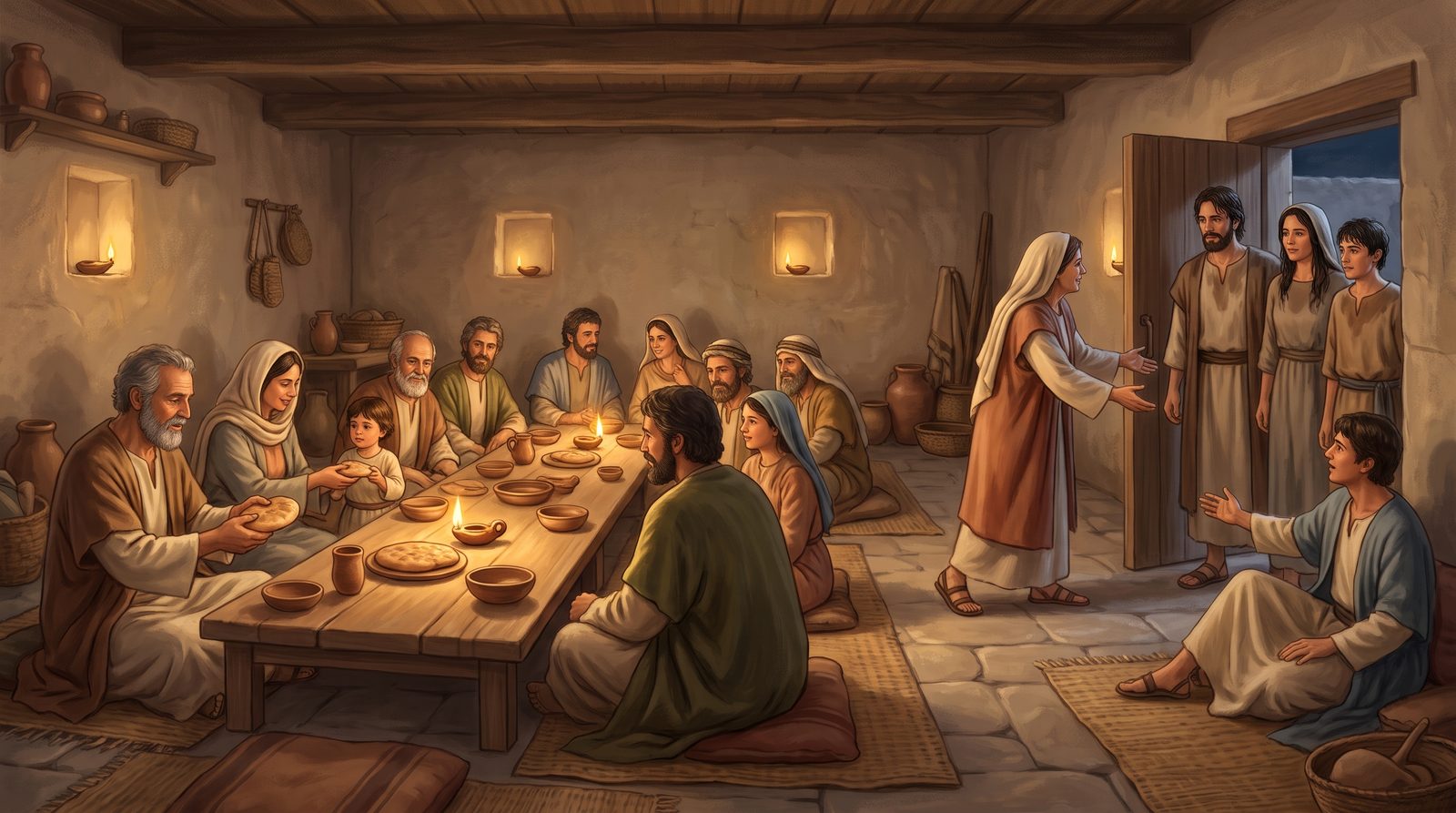
Yes, it matters which church you attend. Here at Christians In Honesdale, we don't say that because of anybody's building or style of singing. We say it because Jesus promised, "on this rock I will build my church" (Matthew 16:18). He meant one church, and He left that church His word to live by.
That can sound stiff on a first read. Give us a few paragraphs to show where it comes from.
How Most of Us End Up Where We Do
People usually pick a church for reasons that make sense. Grandma went there. It's ten minutes from the house. Somebody remembered your name on the second visit, or the kids came home happy from their class. We'd never poke fun at any of that, because a short drive and a kind face are real gifts.
Look at what ties those reasons together, though. Each one is about what suits us. Scripture starts somewhere else. It asks what the Lord wants.
Israel learned that the hard way. After the kingdom split, Jeroboam worried that his people would keep making the trip south to worship at Jerusalem, where God had put His name. So he made two golden calves, set them up at Bethel and Dan, and told the people, "You have gone up to Jerusalem long enough" (1 Kings 12:28). He appointed his own priests and even picked his own feast day, "in the month that he had devised from his own heart" (1 Kings 12:33). It was closer and easier, and it came with a familiar feel. God called it sin (1 Kings 12:30).
A note on the Hebrew: "You have gone up to Jerusalem long enough" is rab-lākem mēʿălôt yərûšālāim, literally "It's too much for you to go up to Jerusalem." Jeroboam's pitch was convenience. "Devised" is bādāʾ, a rare verb meaning to invent or make up. Nehemiah uses it when he tells his accusers, "you are inventing them out of your own mind" (Nehemiah 6:8). Jeroboam's worship came out of his own heart, not God's word.
When Jesus Said "My Church"
Jesus spoke of one church, and He called it His. In the book of Acts, Luke tells how people came into it. "And the Lord added to their number day by day those who were being saved" (Acts 2:47). Nobody filled out a membership card. The Lord did the adding, and the people He added were the ones He was saving.
A note on the Greek: "Added" is prosetithei, an imperfect tense, so it means the Lord kept adding, day after day. "Those who were being saved" is tous sōzomenous. The same people being saved were the ones being added. Luke never describes anyone saved and then left to choose a church later.
Paul later told the Christians in Ephesus that there's "one body" (Ephesians 4:4), and he made clear that the body is the church. God gave Christ "as head over all things to the church, which is his body" (Ephesians 1:22-23; see also Colossians 1:18). People come into that body the same way in every century: "For in one Spirit we were all baptized into one body" (1 Corinthians 12:13). One body has one head.
That changes the question. It's less about which style of Christianity fits your personality and more about whether you've found the church Jesus said He'd build, and whether the Lord has added you to it.
"Doesn't Jesus Save, Not a Church?"
We hear this one often, and the first half is exactly right. Jesus saves. No congregation can forgive a single sin.
But look at what the New Testament says Jesus did for the church. Paul told the elders at Ephesus "to care for the church of God, which he obtained with his own blood" (Acts 20:28). And Christ is "the head of the church, his body, and is himself its Savior" (Ephesians 5:23). The church isn't a club that sits off to one side of salvation. It's the people Jesus bought and saves.
A note on the Greek: "Obtained" is periepoiēsato, to acquire something for yourself, to make it your own possession. Peter uses a related word when he calls Christians "a people for his own possession" (1 Peter 2:9). Jesus paid for the church with His blood, so it belongs to Him, and He gets to say what it is.
So we'd turn the question around. If Jesus bought one church with His own blood, it's worth a few weeks of reading to find out what that church looks like.
A Kind Church Can Still Teach the Wrong Thing
Friendliness and faithfulness aren't the same. A congregation can greet you warmly at the door and still teach something the apostles never taught. John wrote plainly, "Everyone who goes on ahead and does not abide in the teaching of Christ, does not have God. Whoever abides in the teaching has both the Father and the Son" (2 John 9). Going on ahead means moving past what Christ taught, as though His teaching needed improving.
A note on the Greek: "Goes on ahead" is proagōn, to lead forward or run out in front. John pictures someone who thinks he's making progress by moving past the teaching of Christ. Some later manuscripts read parabainōn, "transgresses," which is the reading behind the King James "transgresseth." Either way, the person has left the teaching behind.
Jesus said something just as sobering about devout, sincere people in His own day: "in vain do they worship me, teaching as doctrines the commandments of men" (Matthew 15:9). He was quoting Isaiah 29:13. They meant every word of their worship. It still came up empty, because they'd put human rules in the place God's word belonged.
The Old Testament shows the same thing at the altar itself. Nadab and Abihu were priests, sons of Aaron, men who'd been up on Mount Sinai and seen the God of Israel (Exodus 24:9-10). They "offered unauthorized fire before the LORD, which he had not commanded them" (Leviticus 10:1), and it cost them their lives.
A note on the Hebrew: "Unauthorized fire" is ʾēš zārāh, literally "strange fire," fire foreign to what God had prescribed. Then comes the phrase that matters most: ʾăšer lōʾ ṣiwwāh ʾōtām, "which He had not commanded them." Moses doesn't say God had forbidden it. He says God hadn't asked for it. That was enough.
Sincerity counts for a lot. It just isn't the yardstick. Paul is the proof. He persecuted the church and later said, "I have lived my life before God in all good conscience up to this day" (Acts 23:1; see also Acts 26:9). He meant it, and he was wrong. Later he wrote of his own people, "they have a zeal for God, but not according to knowledge" (Romans 10:2).
That's why we pay close attention to what a church tells people to do to be saved (Acts 2:38). How it worships matters too: "God is spirit, and those who worship him must worship in spirit and truth" (John 4:24). And so does the question of who's actually in charge.
Four Questions to Carry Into Any Church
You won't need a seminary degree for this. You'll need an open Bible and some patience. The people of Berea are a good example, since "they received the word with all eagerness, examining the Scriptures daily to see if these things were so" (Acts 17:11). They checked even an apostle's preaching against the Scriptures they already had.
These four questions work wherever you visit:
A note on the Greek: Baptizō means to dip, plunge or immerse. Greek writers used it for dyeing cloth and for a ship going under. Paul's picture fits the word: "We were buried therefore with him by baptism into death, in order that, just as Christ was raised from the dead by the glory of the Father, we too might walk in newness of life" (Romans 6:4). You can't bury something with a few drops.
Put every one of these questions to us. Our singing is a cappella, which means voices only and no instruments, as Ephesians 5:19 describes. We observe the Lord's Supper, the bread and cup Christians share in memory of Jesus, on the first day of every week (Acts 20:7). We'd want you to hold all of it up to the text.
The last question includes one place where we're still on the way. We're a small congregation of fewer than twenty members, and right now none of our men meet the qualifications Paul lays out for elders (1 Timothy 3:1-7; Titus 1:5-9). So we don't have elders yet, and we won't appoint anyone just to fill the title. That isn't unusual in the New Testament. Paul and Barnabas planted churches and came back later to appoint elders (Acts 14:21-23), and Paul left Titus in Crete to "appoint elders in every town" where congregations were already meeting (Titus 1:5). Until the Lord raises up qualified men among us, we work together as a congregation under Christ and His word.
Where We Have to Stop Short
None of this means we've weighed anyone's heart. We can't, and it isn't our place. Jesus said His own word will judge on the last day (John 12:48).
Plenty of devout, kind people worship in places where things differ from the New Testament pattern, and we don't question how much they mean it. We're only saying that choosing a church is more than a matter of taste. Treat it that way.
The same measure falls on us. Christians In Honesdale answers to no headquarters and belongs to no denomination (a larger church body with its own name and rules), so nobody hands us our teaching and we don't hand ours to anybody else. That also means we can't vouch for every congregation that sounds like us. We can only answer for this one.
A Place to Begin Reading
If you're trying to decide where to worship, start with the book of Acts and read it slowly. Notice how people became Christians and what they did when they gathered. Then measure any church you're considering against what you've read, ours included. There's no need to rush. A decision like this deserves a few weeks of careful reading.
Read Acts With Us, Any Week You Like
If you'd like company while you read, we'll open the text with you one on one, at whatever pace you choose, and your questions can lead the way. You can set up a free Bible study, learn more about who we are, or get in touch before your first Sunday.
Times to join us:
We meet in Suite D at 416 Main Street, Honesdale, PA 18431. Parking is behind the building, and the door you'll use is at the rear of the building as well.